Japan · city guide
Kyoto: the city that stole my heart
Vermilion torii, bamboo light and quiet machiya lanes, the middle stop on the three-city route.
Kyoto is the city I keep telling people they'll fall for, and it's the heart of the three-city run I shape for first-timers. It's the calm middle stop between Tokyo's neon and Osaka's food, about two and a half hours down the shinkansen, where Japan slows right down: thousands of vermilion torii on a hillside, a bamboo grove that filters the light green, and old wooden machiya lanes you can lose a whole evening in. It's where I'd spend the proper ryokan-and-kaiseki splurge, because it earns it. Here's exactly how I'd spend a few days.
- The temples-and-quiet-lanes heart of the trip
- ~2.5 hrs from Tokyo on the shinkansen
- Subway, buses and an IC card cover the rest
Best things to do
Walk up through the Fushimi Inari torii
The thousands of vermilion gates climbing the hillside, and the reason half of you are coming. Go at dawn or near dusk to have the upper paths almost to yourself; most people turn back early, so keep climbing.
Morning in the Arashiyama bamboo grove
The tall green stalks that filter the light, best before the day crowds arrive. Get there early, then wander the riverside and the temple gardens nearby.
See Kinkaku-ji, the golden pavilion
A temple sheathed in gold leaf mirrored in its own pond. Small and busy, but worth the quick loop of the garden path, especially on a clear morning.
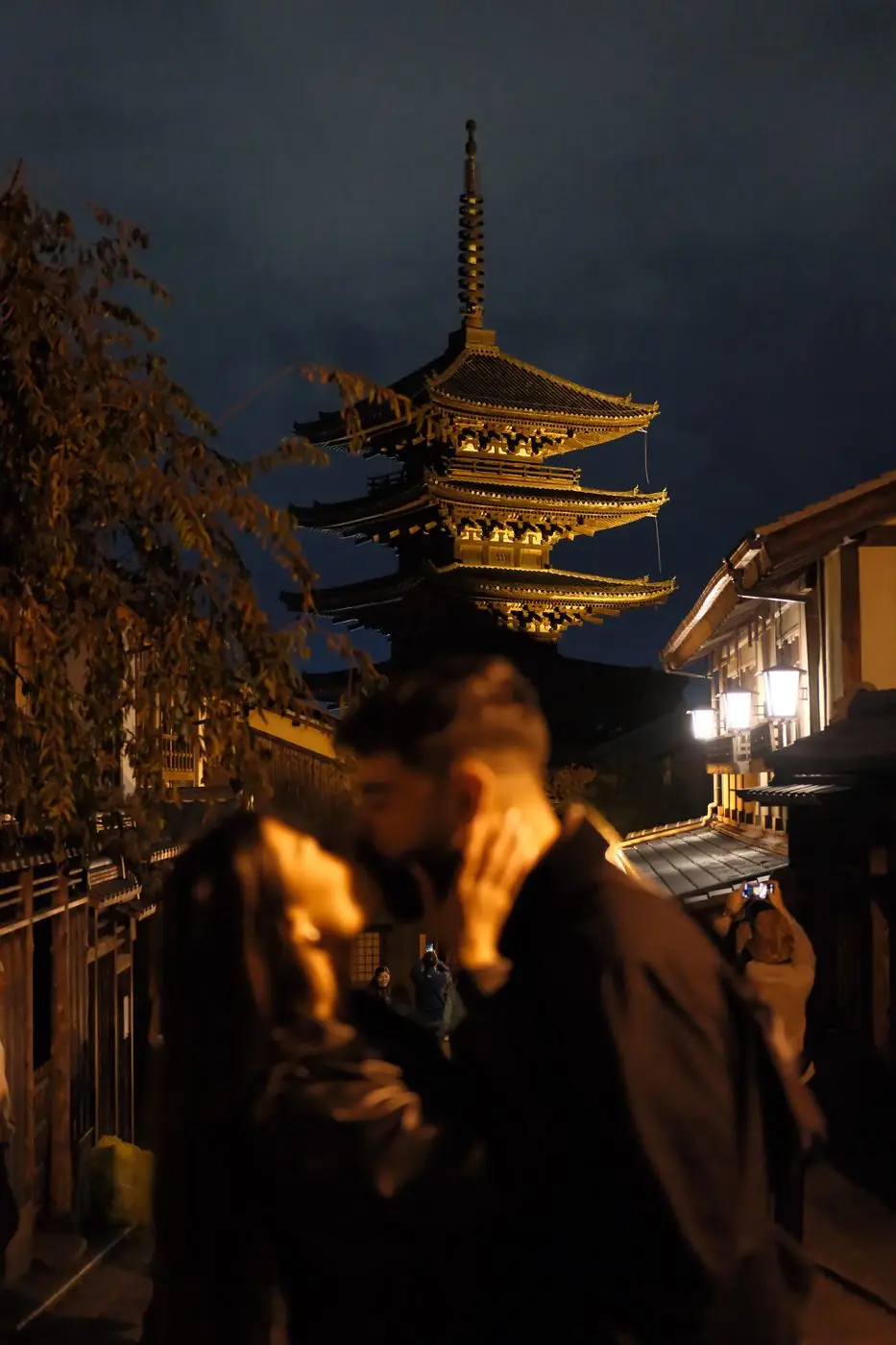
Evening in the Gion geisha lanes
The old wooden machiya streets at dusk, lanterns coming on, the odd geiko hurrying to an appointment. Wander slowly, keep your camera down on the private lanes, and just take it in.
Where to stay
Getting there & around
Most people arrive on the shinkansen, and that's the spine of the whole trip: about two and a half hours down from Tokyo, then under fifteen minutes on to Osaka, with Kyoto Station the middle stop. Reserve your seats in peak season rather than gambling on the unreserved cars. Once you're here you don't need a plan beyond an IC card: tap it on the subway and buses, which reach Fushimi Inari, Arashiyama and the temples, and walk the central lanes and Gion in the evening. Tap on, tap off, and let the trains do the rest.
Eat & drink
- Nishiki Market — The long covered food street downtown, the cheap and easy lunch: pickles, skewers, tamagoyaki and a matcha something to finish, eaten as you wander.
- A ryokan kaiseki dinner — For one special night: the slow, course-by-course Kyoto dinner served at your ryokan. The splurge meal I'd build a whole evening around.
Day trips
On the map
Book this trip
A few of these earn me a small cut at no extra cost to you — only ever things I'd actually book.
Frequently asked
How long should I spend in Kyoto on the three-city route?
Two to three days is the sweet spot. That's enough for Fushimi Inari, the Arashiyama bamboo, a temple or two and an evening in Gion without rushing, and it's how I pace it between your Tokyo and Osaka days.
When's the best time to visit the big sights?
Early. Fushimi Inari and the Arashiyama bamboo are magic at dawn and shuffly by mid-morning, which is exactly why I shape the route around your dates: a quiet Tuesday and a packed Sunday in Kyoto are two different cities.